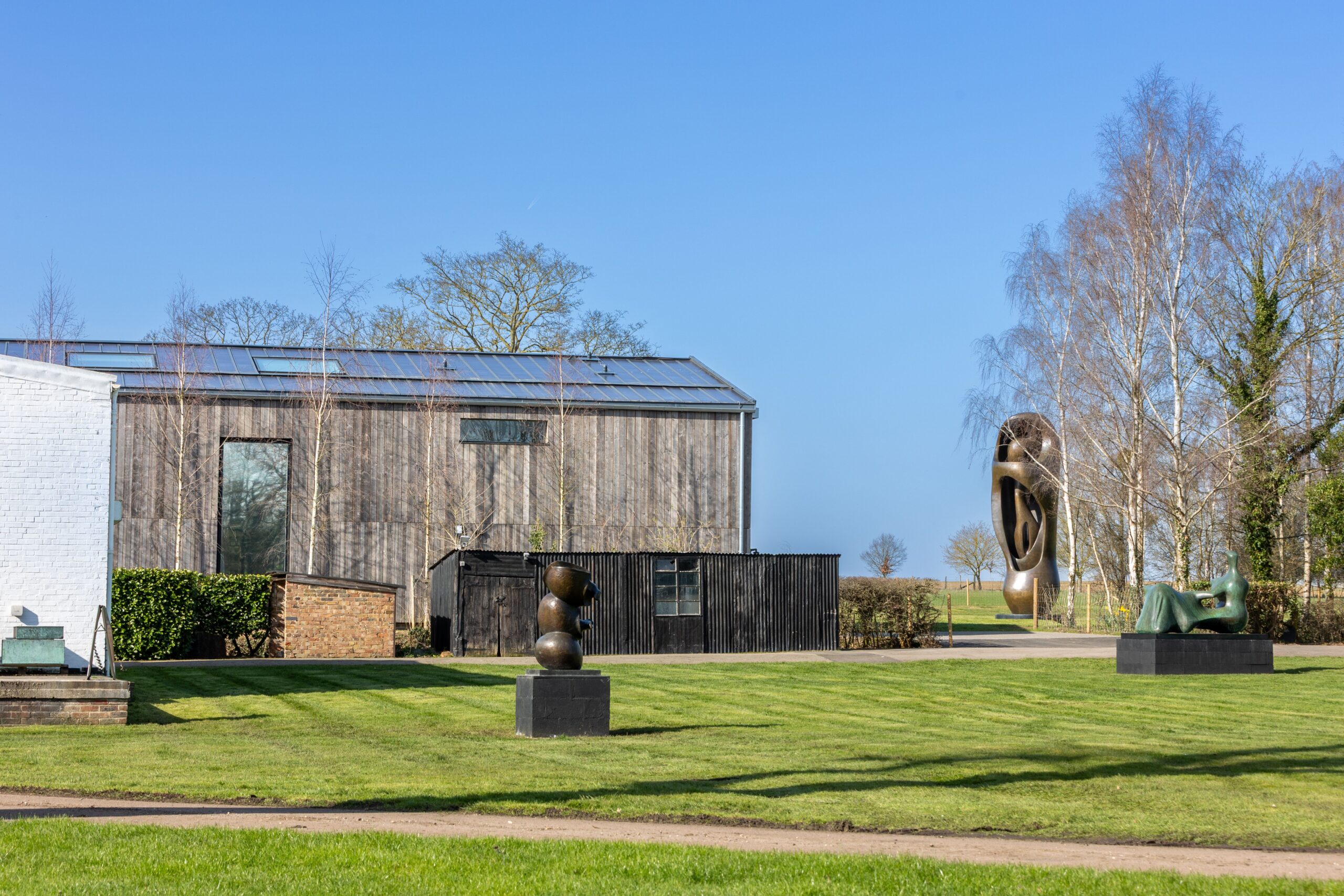
 Henry Moore Studio & Gardens in Perry Green © Rob Hill
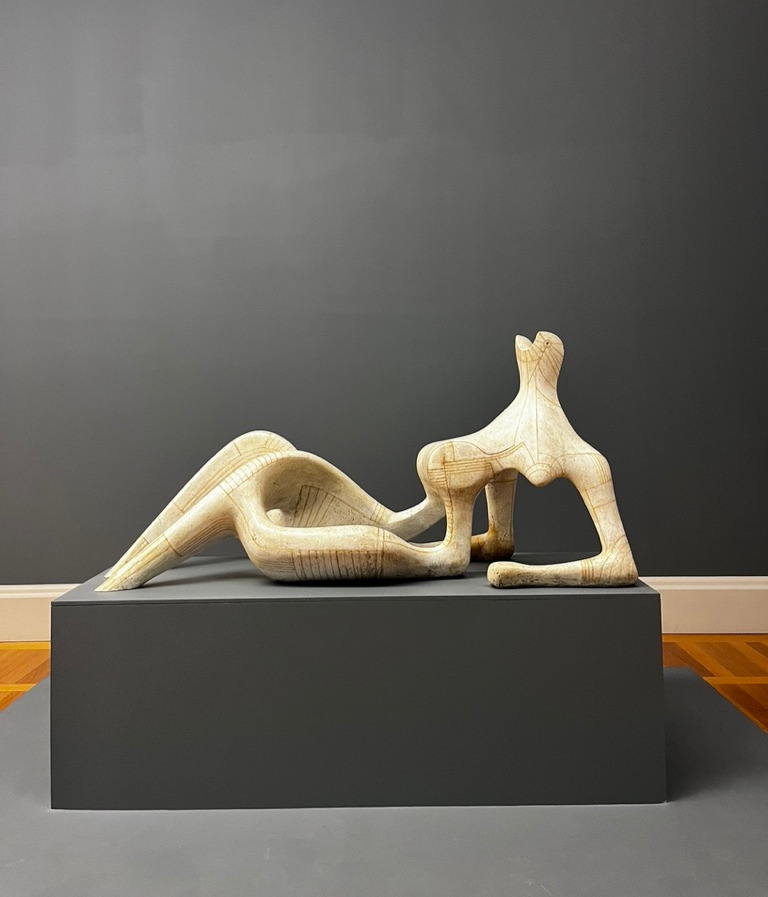 "Reclining Figure 1951" for the Festival of Britain
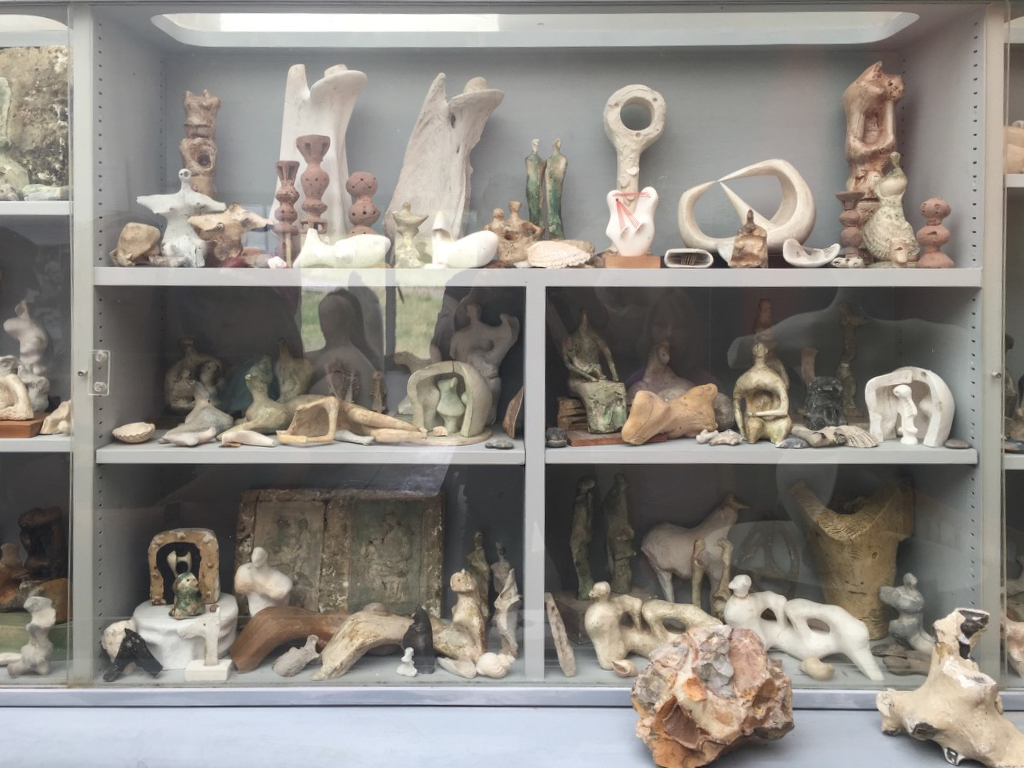 Henry Moore's collection of flint and maquettes
Henry Moore – celebrated everywhere as an artist (and salesman) extraordinaire.
A visit to his long time home at Perry Green is well worth the effort, not only for the sculptures, the studio full of inspirational flints, the covetable cactus house and tapestries, but also the ultimate 70’s lounge complete with a cool cocktail trolley to woo purchasers and a narwhal’s tusk.
Back in London, a favourite work is not one of the many outward-bound bronzes, but a plaster and string model created for the Festival of Britain. Eventually cast in an edition of five bronzes, this recumbent holey figure at Tate Britain has the feel of a carved piece of scrimshaw, poised and wary. I’m not always a lover of Henry Moore, but would happily own a small plaster maquette of this – like the ones in the studio at Perry Green.
Laura Fidment, director
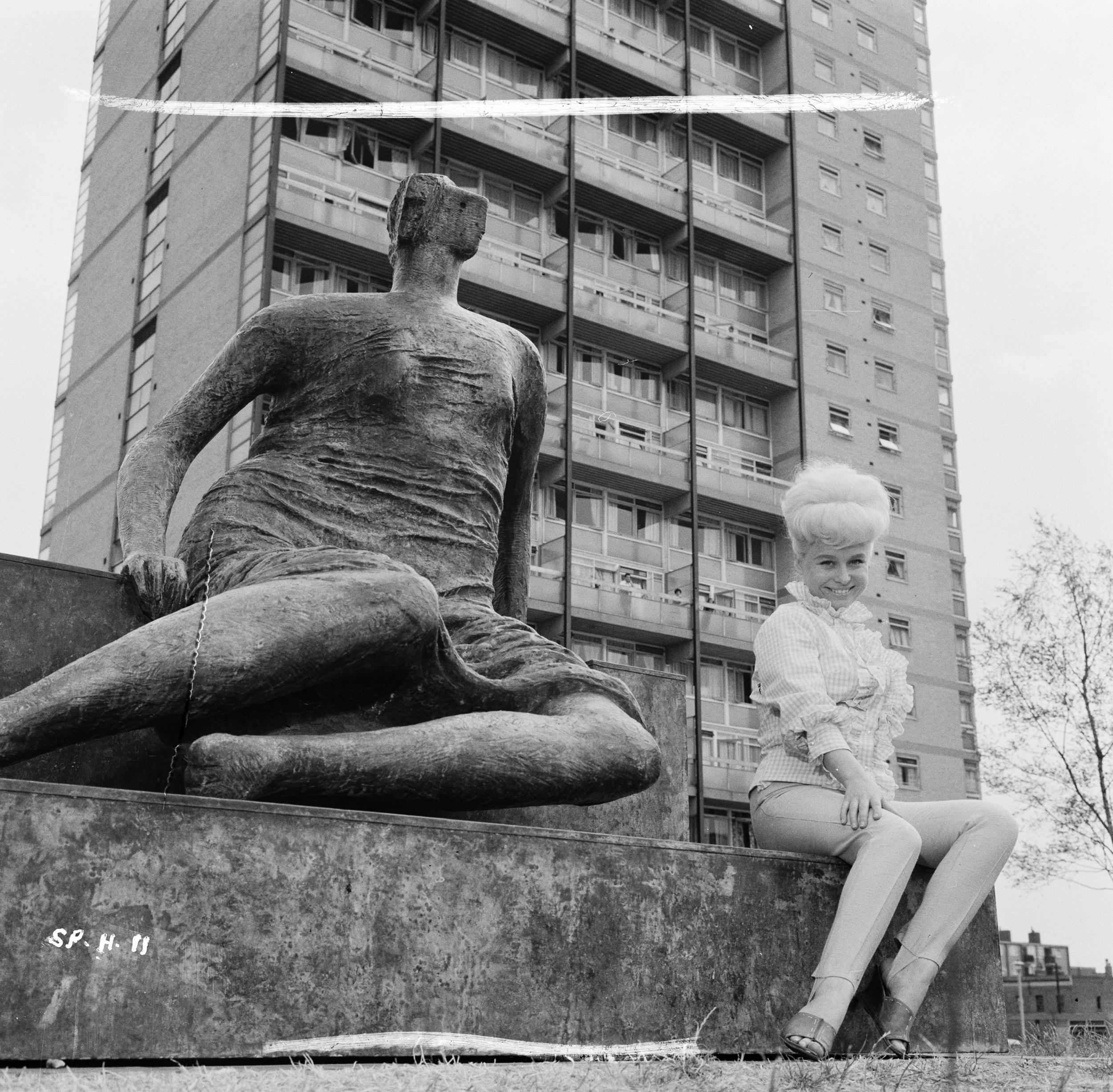 Old Flo and Barbara Windsor in Stepney Green © Studio Canal
Draped Seated Woman Cast 2, or Old Flo as she is more familiarly known, is one of a set of figures created by Moore in the 1960s and influenced both by sketches he drew of Londoners sheltering underground during the Blitz and Classical sculptures he saw in Greece in 1951.
She’s had quite the journey – originally seated majestically on the Stifford Estate in east London as part of the LCC’s patronage of the arts she was loaned to Yorkshire Sculpture Park in 1997 when the estate was demolished and controversially offered up for sale by an unsympathetic mayor trying to balance a council budget in the aftermath of swingeing governments cuts.
After a dramatic chapter in the High Court, Old Flo was retained and returned to a rightful spot within the borough – albeit in Canary Wharf. I think that her story, much like that of another East End Girl done good, speaks to the complicated history of post-war Britain, which shaped the city we live in today – from the suffering and loss of the Blitz, the renewed optimism of the Festival of Britain and its celebration of great British design, the Swinging Sixties, the demise of the industrial docklands and its rebirth as a financial district decorated with gleaming towers, all the way through to the heaviness of the 2010 budget – I wonder what comes next
Charlotte Goodhart, senior digital editor
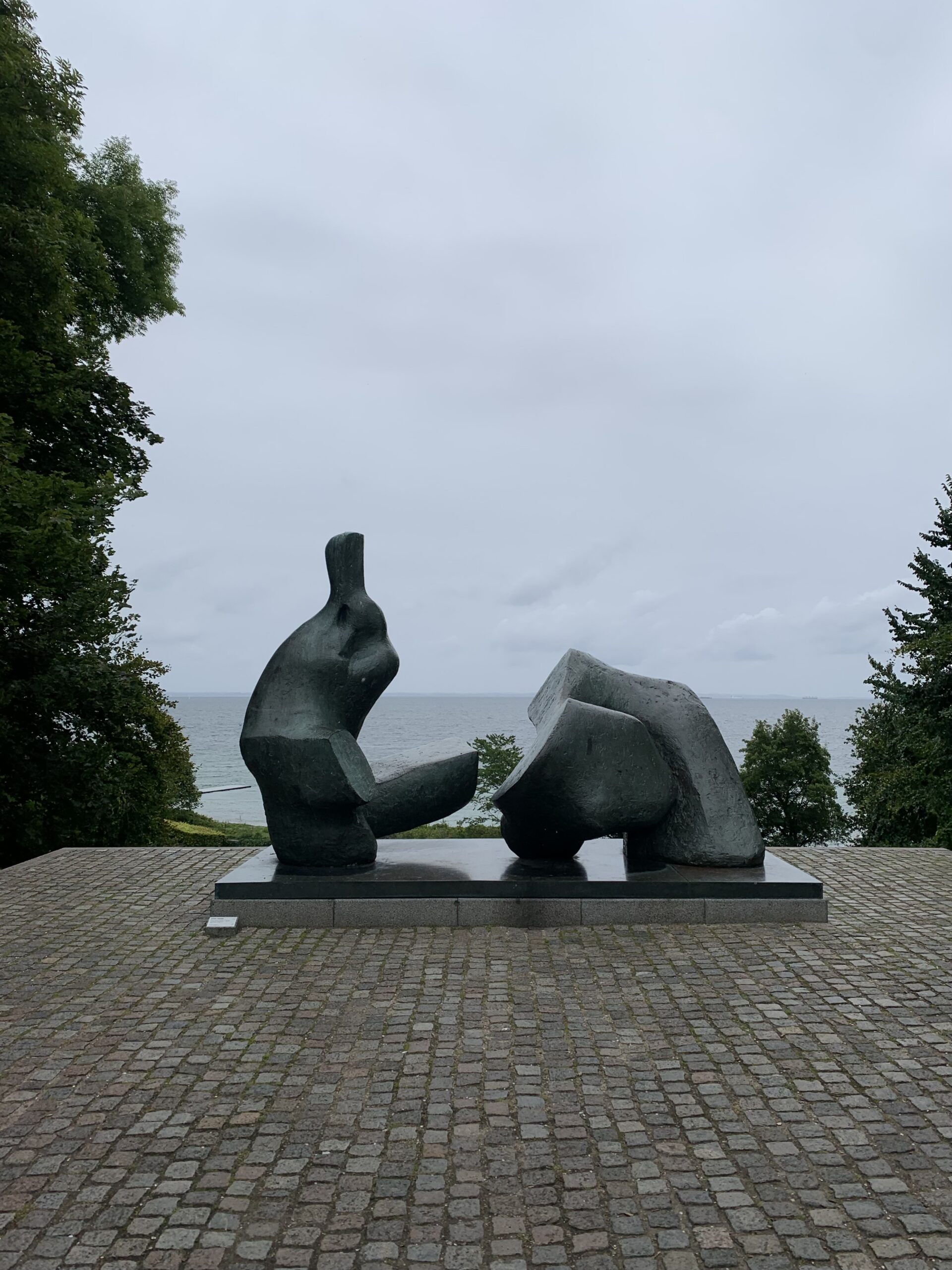 "Two Piece Reclining Figure No. 5" at the Louisiana Museum of Modern Art, Copenhagen
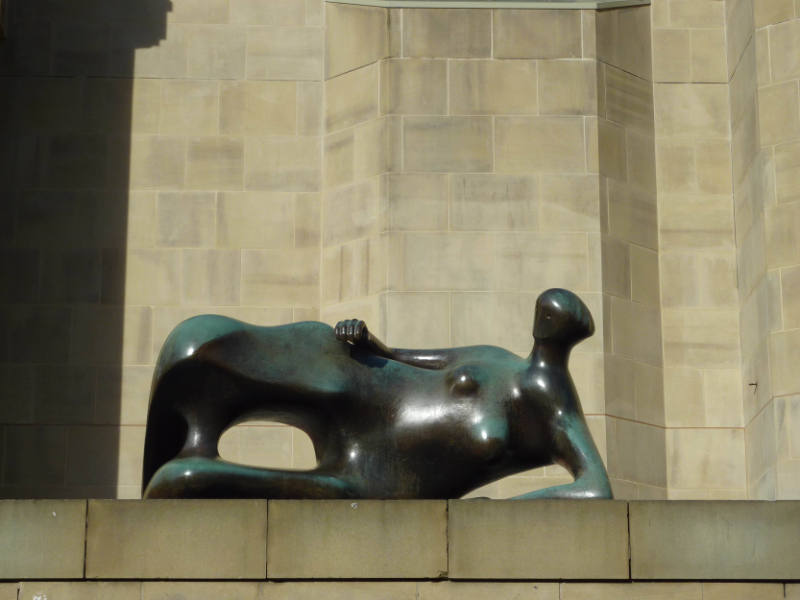 "Reclining Woman: Elbow 1981" outside Leeds Art Gallery © The Henry Moore Foundation
It’s hard to escape Moore in Yorkshire, his work follows you everywhere. From the Yorkshire Sculpture Park to the landscape of the moors and dales which were formative influences for his sculptures and drawings.
The 2023 exhibition Magic in this Country: Hepworth, Moore and the Land at The Hepworth Gallery in Wakefield, unsurprisingly, captured it perfectly: the enduring dialogue between sculpture, body, landscape and place. Yorkshire is not simply the backdrop to Moore’s work; it is embedded within it.
If asked to choose a favourite, it might be Reclining Woman: Elbow (1981) – I know her well, often sitting next to her while she reclined in front of Leeds City Art Gallery in the city centre. But what about the landscape?
Two Piece Reclining Figure No.5, found at the Louisiana Sculpture Gardens in Denmark, is perhaps, quite possibly the most amazing placement of any sculpture ever – right on the horizon by the Danish sea. Abstract bronze bodily shapes that integrate with (or perhaps instead, contrast) the coastal landscape but still take you back to the rocks of Malham Cove and Ilkley Moor.
Alana Scott, account manager
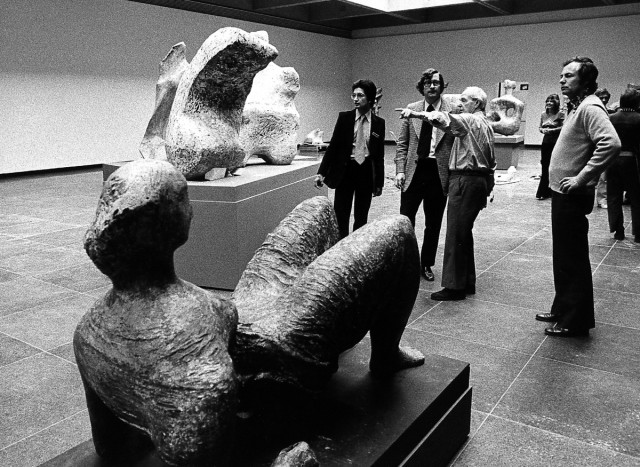 Henry Moore during the installation of the Henry Moore Sculpture Centre in Toronto 1974 © AGO
The world’s largest public collection of Henry Spencer Moore’s work sits with the Art Gallery of Ontario in Toronto, Canada. It is displayed in a purpose-built space designed by local architect John C. Parkin in collaboration with Moore himself. Skylights fill the room with sun while a polished stone floor creates a reflecting pond effect for Moore’s sculptures.
The major donation in the 1970s that allowed this to happen was originally intended for the Tate in London. When Tate declined, Moore decided to take his work to Toronto. This decision could be attributed to a combination of things; the success of an earlier installation outside Toronto City Hall, the AGO’s willingness to fund a dedicated space, and persuasion by Anthony Blunt, a leading British art historian who was later discovered to be a secret Soviet spy.
Spencer Lu, marketing executive